
Folio Society Published Works Number 2217
Bede - History of the English Church and People
We buy and sell items like these, so please contact us if you have similar items for sale, and we will make you an offer if we are interested.
To check if we have this item, or similar items, in stock, please click the Check Stock link below. Alternatively, use the links on the left to search our large online database of items for sale, or to visit the rest of the site.
Check Stock
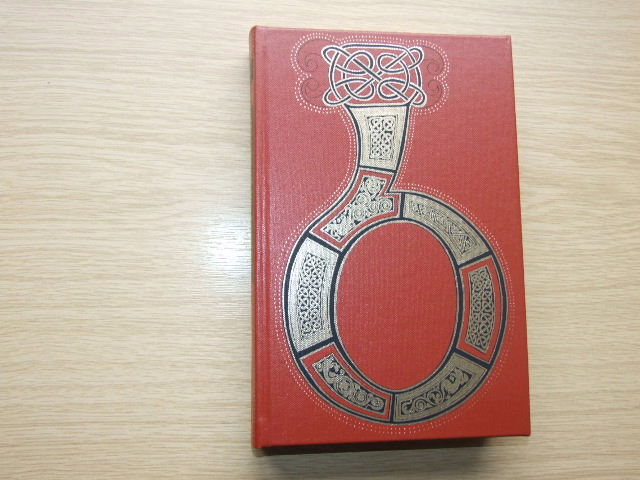
Bede - History of the English Church and People (Published in by The Folio Society in 2010. Translated by Leo Sherley-Price. Bound in cloth, blocked with a design by Neil Packer, based on the opening page from an edition first published in Canterbury. Approx. 336 pages; frontispiece and 12 pages of colour and black & white plates. 'With God's help, I, Bede … have assembled these facts about the history of the Church in Britain … so far as I have been able to ascertain them from ancient writings, from the tradition of our forebears, and from my own personal knowledge'. In 731, at the northumbrian foundation of Jarrow, a monk named Bede completed a masterpiece of historical scholarship, the sophistication of which would not be equalled for centuries. Bede's aim was to record the history of the Church in England. His achievement was far greater, for he created a complete history, not just of the Church but of the people of England, from the arrival of Julius Caesar to the 8th century. We owe most of our knowledge of this period to Bede's work; it is without doubt the most valuable chronicle of Anglo-Saxon England in existence and the cornerstone of English history. This Folio Society edition, introduced by Melvyn Bragg, pays tribute to the 'father of English history'. Given the paucity of written sources, the History was a major undertaking, but Bede corresponded diligently with Europe's finest minds to gather all available material. A pioneer historian, he was the first to popularise the convention of ad in dating. Most important of all, Bede was one of the greatest storytellers of his age, and he created a dramatic narrative out of fragmentary evidence, from scarce written accounts to the rich oral tradition of stories and poems handed down within monasteries and courts. Bede's lively narrative transports us to a fascinating world of Angles, Saxons, Picts and Jutes, border wars and forced conversions. We meet figures such as Aidan, the Irish monk who converted Northumbria, Ethelwald, bishop of Lindisfarne, and Bertha, queen of Kent. Whether describing the miracles ascribed to King Oswald of Northumbria, the synod of Whitby or the conversion of the Isle of Wight (the last place in Britain to accept the new religion), Bede gives us an unrivalled account of Anglo-Saxon England and of the early days of Christianity. )